Quick answer: Start with Gemini 4 Hydrogen for speed-sensitive agent loops, Argon for capable general coding and multi-step reasoning, and Carbon for particularly difficult, long-horizon problems. This is a practical starting point—not an absolute ranking. Repository complexity, reasoning level, tools, latency and plan access still matter.
1. How Carbon, Hydrogen and Argon differ
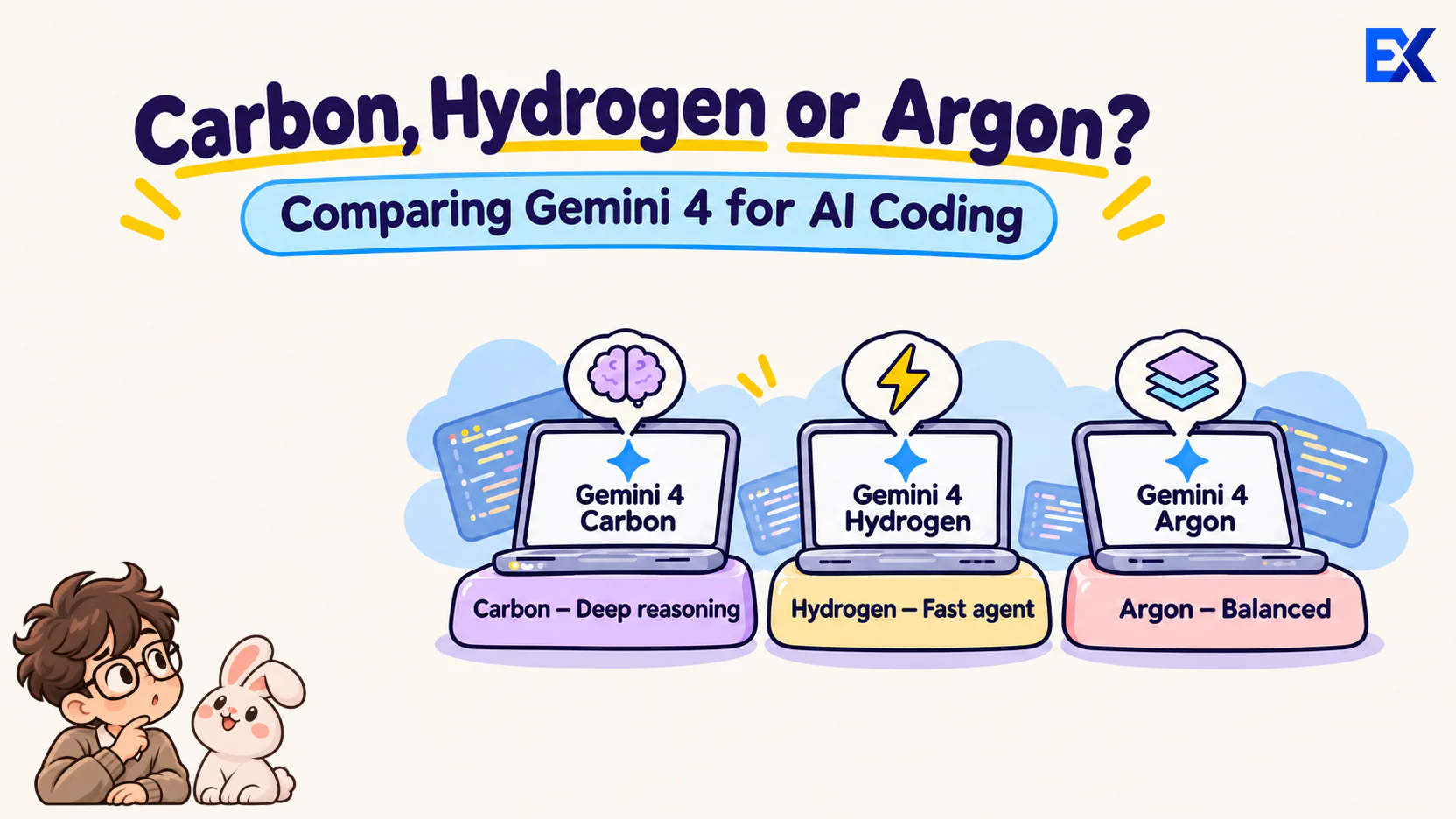
Google introduced Hydrogen on November 12, 2026, emphasizing speed and efficiency for everyday coding and agent workflows. Google describes Carbon and Argon as frontier models for deeper, longer-horizon reasoning. Hydrogen is not automatically worse at coding: it may be a stronger fit for short, repeatable execution steps.
Model
Emphasis
Try it for
Verify
Hydrogen
Fast agent execution
Tests, narrow fixes, repetitive steps
Rework and result quality
Argon
Strong general coding and reasoning
Features, review, refactoring
Completion time and correctness
Carbon
Deep, demanding reasoning
Complex bugs, architecture
Whether the extra depth is needed
This is a qualitative selection guide based on product positioning, not an independent benchmark of your codebase.
Choosing Gemini 4 Hydrogen, Argon and Carbon by coding task
Illustrative model-selection guide; verify against your own testing.
2. Which model should you use for AI coding?
New features: try Argon when context spans many files, then use Hydrogen for narrowly specified implementation steps. Hard debugging: provide failure logs and tests; consider Carbon if the root cause demands deeper, multi-stage investigation. Tests and formatting: start with Hydrogen when available.
Optimize for completed, verified work—not merely the speed of one response. Fast answers may require more manual correction.
3. A fair repository-level comparison
Pin inputs: the same commit, prompt, files, tools and test suite.
Specify success: passing tests, expected behavior and review criteria.
Run each model: record thinking level, elapsed time, retries, human edits and any displayed token/quota use.
Compare end-to-end cost: include verification and rework, not just generation latency.
Measure
Record
Tests
Passing / valid total
Completion time
Prompt to verified solution
Retries
Follow-up repair requests
Manual work
Human code changes after completion
Usage
Actual displayed tokens or quota
Assess AI coding performance with tests, time and quota
Illustrative measurement workflow, not measured experimental results.
4. Orchestrator in Google Antigravity
According to Antigravity's model documentation, Orchestrator can pair planning by Carbon or Argon with fast execution by Hydrogen. Check the current model selector and your entitlement before using it.
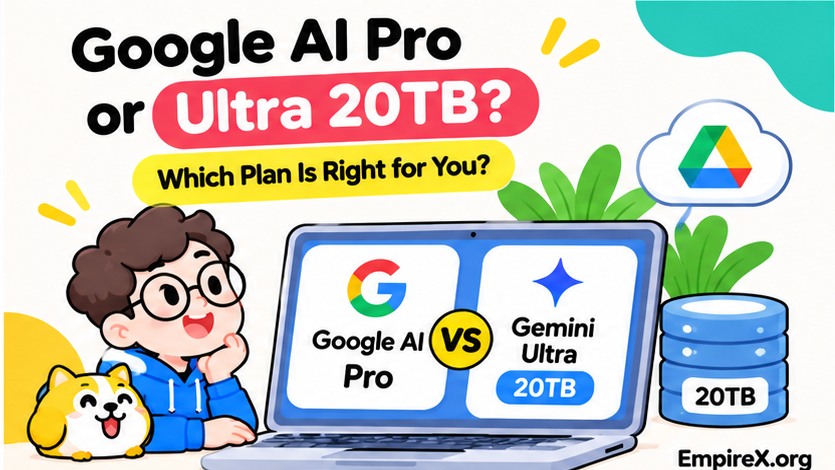
At its announcement, Google described Orchestrator (Argon) for paid Google AI Pro users and both Orchestrator (Carbon) and (Argon) for Google AI Ultra users. Availability and rollout may change; verify the latest documentation and your account.
5. Practical quota-saving habits
Share relevant files, failing tests and logs rather than the entire repository unnecessarily.
Split large tasks into small, testable outcomes.
Use fast execution for simple steps; escalate to deeper reasoning only as necessary.
Review diffs and run tests after consequential changes.
Use actual account usage indicators instead of assuming a fixed quota from a model's name.
Usage and limits vary with plan, product, model and time. Do not publish universal quotas without the relevant official documentation.
6. Example: repair a failing test
Suppose a library upgrade causes tests to fail. Start with the stack trace and related files using Hydrogen or Argon, asking for a minimally scoped fix. If the issue spans multiple modules or architectural assumptions, try Carbon for diagnosis. Re-run tests, inspect the diff and record retries. This is a hypothetical workflow, not a completed benchmark.
7. Frequently asked questions
Is Carbon always better than Argon?
No. The task, reasoning settings, latency and verified outcome determine the better option.
Can Hydrogen debug complex problems?
It may, especially when work is split into clear steps. Compare it with Argon or Carbon on difficult root-cause analysis.
Does everyone need Google AI Ultra?
No universal conclusion follows from a model name. API, AI Studio, Gemini and Antigravity may have different access rules.
Does Orchestrator always save quota?
Not necessarily. Measure usage and completed-work quality in your environment.