
Gemini 4 Carbon Explained: Features, Benchmarks, Availability & Argon Comparison
Updated November 4, 2026. Google announced Gemini 4 Carbon on October 28, 2026, positioning it as its strongest model for cybersecurity and long-horizon engineering. Carbon scored 59 and ranked first on Artificial Analysis Intelligence Index v5.0 at announcement time. However, it is not yet broadly available to consumers.
Gemini 4 Carbon targets long-running engineering workflows and cyber defense.
What is Gemini 4 Carbon?
Gemini 4 Carbon is a frontier AI model from Google DeepMind built for sustained, multi-step engineering work, coding agents and cybersecurity defense. Rather than simply answering one-off prompts, its target workflows include exploring large codebases, investigating subtle bugs, validating findings and generating patches that still require human review.
Quick answer: Announced October 28, 2026, Carbon focuses on vulnerability discovery, risk validation, software patching and long-running engineering agents. Initial access is restricted to selected cybersecurity defenders and trusted partners.
Five important Gemini 4 Carbon features
1. Cybersecurity defense performance
According to Google's announcement, Carbon scored 88.2% on SEC-bench Pro for vulnerability finding, 54.8% on ExploitGym for validating exploitability and 71.0% on CWE-bench for patching. These are benchmark results, not success rates across all real-world systems.
2. Long-horizon AI agents
Google says internal teams have run Carbon for days while investigating complicated engineering problems. Such workflows require an agent to keep track of successive experiments, dead ends and code changes. This points to a future in which coding agents take on longer assignments, but production deployments still need testing and oversight.
3. Coding and web development improvements
Google reports stronger secure-code generation versus Argon in internal tests. Carbon also gained 89 Elo points on WebDev Arena, reaching fourth place with 1,768 Elo when announced. Different evaluations measure different capabilities; no single ranking establishes the best model for every development task.
4. More reliable agent behavior
In Google's internal assessments, Carbon produced approximately half as many unsupported claims as Argon, while overstepping task boundaries declined 26% and under-serving user requests declined 29%. These results are promising for multi-step agents but should not be treated as guarantees in independent deployments.
5. Prompt-injection resilience
Google reported a 0.0% attack success rate on the evaluated Gray Swan Indirect Prompt Injection benchmark. Zero observed successes on a benchmark do not prove immunity to every possible attack. Developers must continue applying least-privilege access, tool constraints and code reviews.
Gemini 4 Argon provides a useful reference point for Carbon's reported improvements.
Gemini 4 Carbon vs Gemini 4 Argon
| Category | Gemini 4 Argon | Gemini 4 Carbon |
|---|---|---|
| Core focus | Complex reasoning, coding, enterprise knowledge work | Long-horizon engineering and advanced cyberdefense |
| Agents and coding | Multi-step workflows | Reported improvements on coding and agent tasks |
| Security | Strong cybersecurity capabilities | Higher reported security benchmark and secure-code results |
| Availability on Nov 4 | Broader rollout announced | Restricted initial testing and trusted partners |
| Announced introductory API price | Google introductory pricing | $2 / 1M input tokens; $10 / 1M output tokens |
Pricing context: Google says Carbon will share Argon's introductory rates, then move to $4 per million input tokens and $20 per million output tokens afterward. These are announced prices for its future commercial availability, not proof of general API access today.
When can people use Gemini 4 Carbon?
As of November 4, 2026, Google is providing the model initially to a subset of cyber defenders, expanding testing to trusted partners through the Fairwind Program and refining safeguards ahead of broader release. Google has not announced a precise public availability date for the Gemini app, Google AI Studio, API or standard subscription plans.
Consequently, subscribing to Google AI Pro, Google AI Ultra or Antigravity must not be interpreted as immediate access to Carbon. Access depends on Google's rollout decisions.
What does Carbon mean for AI coding and Google Antigravity?
Carbon reflects growing interest in agents that can investigate multi-file repositories, identify root causes and propose safer patches. These capabilities are relevant to the direction of tools such as Google Antigravity Pro and Antigravity Ultra.
There is no basis to claim Carbon is already included in existing Antigravity subscriptions. For more context, see EmpireX's guide to shared Family quota in Antigravity. Readers exploring Google's broader AI ecosystem can also browse Gemini AI Pro at EmpireX; model availability remains controlled by Google.
Frequently asked questions
When was Gemini 4 Carbon announced?
Google announced Carbon on October 28, 2026.
Is Gemini 4 Carbon free?
Google has not announced general free consumer access. Future introductory API pricing has been described, but access is still restricted.
Is Carbon better than Argon?
Google reports improvements in selected coding, security and agent evaluations. That does not establish universal superiority across every use case.
Can I use Carbon in Google Antigravity today?
As of November 4, 2026, Google has not confirmed a broad Carbon rollout in Antigravity.
Conclusion
Gemini 4 Carbon represents an important step for coding agents, cybersecurity and longer engineering tasks. Its benchmarks are noteworthy, yet a model announcement is not the same as general product availability. EmpireX will continue following Google's official rollout updates.
Sources and further reading
Related Products


Related Posts
Top 9 Hottest AI Models in Early November 2026: GPT-6, Gemini 4, Claude 5.5
Top 9 AI models in November 2026: GPT-6, Gemini 4 Argon, Claude 5.5, Grok 4.7, and DeepSeek V4.1. Compare AI coding, deep reasoning, and AI Agent power.
Google Veo 3: Veo 3.1 Lite 0 Credit Removed from Ultra
Google update removes Veo 3.1 Lite 0 Credit from the Ultra plan. Check out the latest policy announcement and workflow solutions from EmpireX.
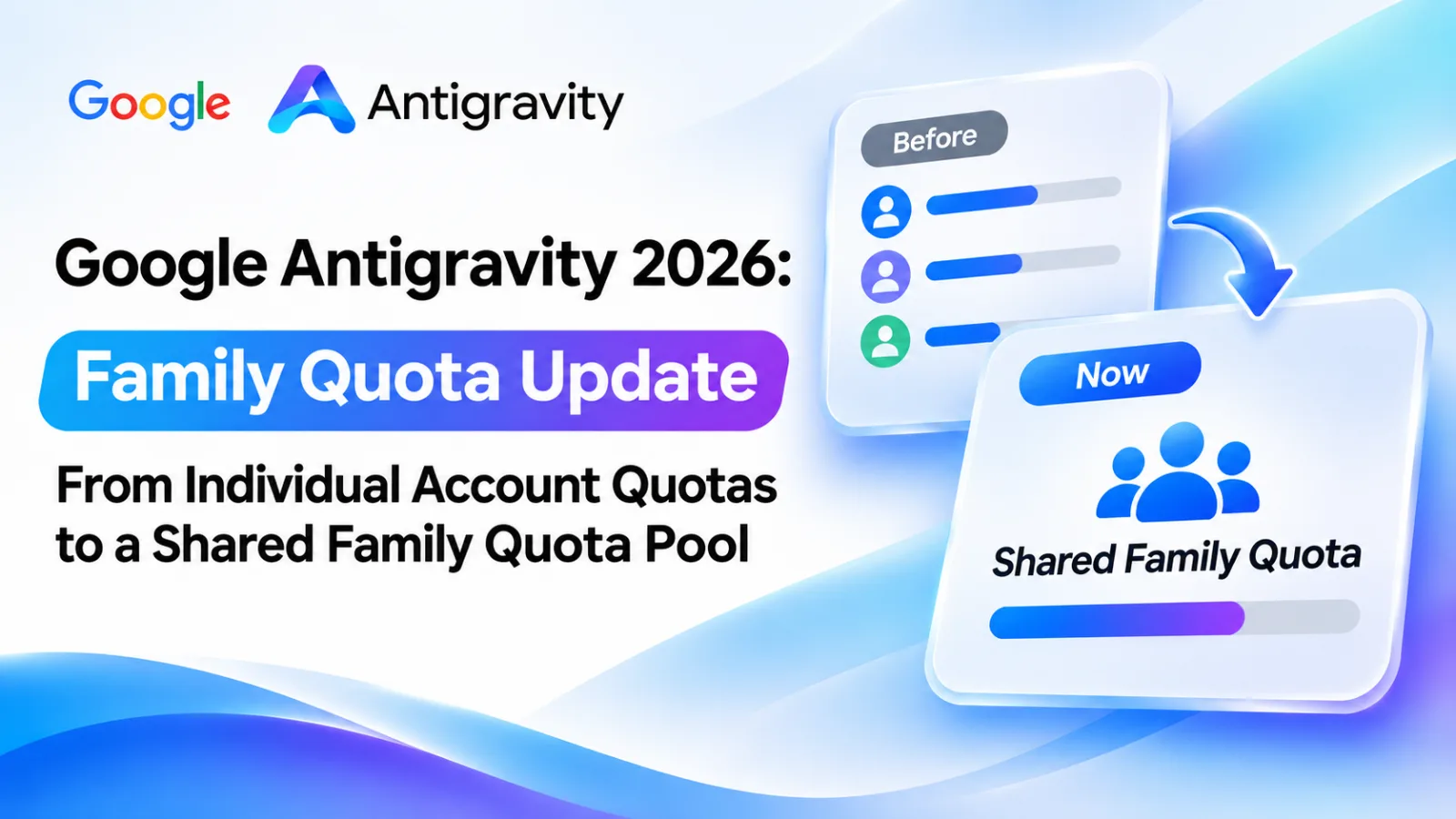
Google Antigravity 2026: Family Quota Changes – From Individual Account Limits to a Shared Quota Pool
Google has updated Antigravity's quota system, shifting from individual account limits to a shared Family quota pool. Discover the timeline, supporting evidence, and how these changes affect users.
How to Install OpenClaw on Ubuntu VPS: Configuration & Dashboard Access
A step-by-step guide to installing OpenClaw on Ubuntu VPS. Learn how to handle headless authentication and access the Dashboard securely via SSH Tunneling.